Collection: Wakizashi
What Is a Wakizashi?
The wakizashi is a traditional Japanese short sword with a blade length typically between 30 and 60 centimeters (approximately 12 to 24 inches). It was the companion sword to the katana, worn together as a pair known as the daisho — literally "big-little" — which was the exclusive privilege of the samurai class during Japan's feudal era. While the katana served as the primary weapon in open combat, the wakizashi fulfilled a range of specialized roles that made it an indispensable part of the samurai's arsenal.
At Samurai Swordman, our wakizashi collection features handcrafted blades that honor the historical significance and functional design of this remarkable sword. Whether you are a collector seeking an authentic companion to your katana, a martial arts practitioner studying nito-ryu (two-sword style), or simply drawn to the elegant proportions of the short sword, our wakizashi selection offers exceptional quality at every price point.
The Historical Role of the Wakizashi
The wakizashi occupied a unique place in samurai culture that went far beyond its role as a backup weapon. Understanding its historical significance deepens appreciation for this often-overlooked sword:
-
Indoor Weapon — When entering a castle or the home of a lord, samurai were required to leave their katana at the door as a sign of respect and peaceful intent. The wakizashi, however, could be kept on the person at all times — making it the samurai's constant companion and last line of defense in close quarters.
-
Seppuku — The wakizashi was the traditional instrument of seppuku, the ritual suicide practiced by samurai who faced dishonor or defeat. This solemn role gave the wakizashi a profound cultural and spiritual significance that elevated it beyond a mere weapon.
-
Close Combat — In the chaos of close-quarters combat, the shorter blade of the wakizashi was more maneuverable than the katana, making it effective in confined spaces where a longer sword would be unwieldy.
-
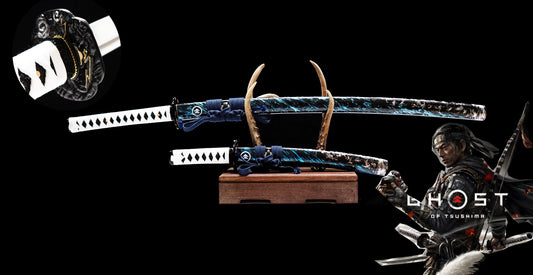
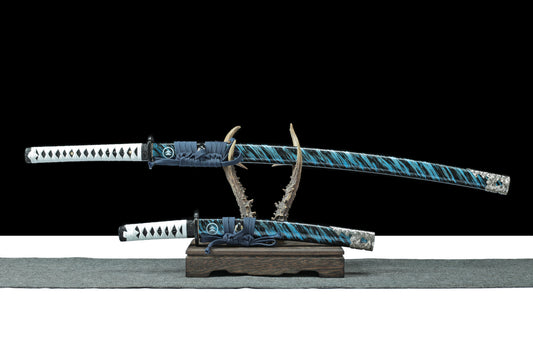
Status Symbol — The daisho — the paired katana and wakizashi — was the visible symbol of samurai status. Only members of the warrior class were permitted to wear both swords. The quality and craftsmanship of a samurai's daisho reflected his rank and wealth.
-
Nito-Ryu — The legendary swordsman Miyamoto Musashi developed nito-ryu, the two-sword fighting style that uses both the katana and wakizashi simultaneously. This style, described in Musashi's Book of Five Rings, remains one of the most studied and admired approaches to Japanese swordsmanship.
Wakizashi Construction and Design
The wakizashi shares the same fundamental construction as the katana, scaled to its shorter blade length:
-
Blade — Forged from high-carbon steel (typically 1060, 1095, or T10), differentially hardened through clay tempering to produce a hard edge and tough spine, with a visible hamon (temper line).
-
Tang (Nakago) — Full tang construction for maximum structural integrity, with the tang running the full length of the handle.
-
Handle (Tsuka) — Wrapped in genuine ray skin (same-gawa) and hand-braided ito (handle wrap), with menuki (ornamental grip pieces) beneath the wrapping.
-
Guard (Tsuba) — A metal guard that protects the hand and balances the sword. Wakizashi tsuba are often matched to the katana tsuba in a daisho set.
-
Scabbard (Saya) — A lacquered hardwood scabbard that protects the blade and completes the sword's presentation.
Choosing a Wakizashi
When selecting a wakizashi, consider how you intend to use it:
-
As a Daisho Companion — If you already own a katana and want to complete a matched pair, look for a wakizashi with matching tsuba design, handle color, and saya finish. A matched daisho is one of the most impressive displays in any sword collection.
-
For Martial Arts Practice — If you study nito-ryu or another style that uses the wakizashi, prioritize a functional blade with proper weight, balance, and a full tang. Our battle-ready wakizashi are suitable for training and practice.
-
For Display — If your primary interest is display, focus on the visual quality of the blade, the craftsmanship of the fittings, and the overall aesthetic of the sword. A well-made wakizashi on a quality stand is a striking display piece.
-
For Collection — Serious collectors often seek wakizashi with distinctive blade characteristics — a vivid hamon, exceptional hada (grain pattern), or historically inspired fittings that reflect a specific period or school of swordsmithing.
Caring for Your Wakizashi
Wakizashi require the same care as any high-carbon steel blade:
- Wipe the blade clean after handling with a soft, lint-free cloth.
- Apply a thin coat of choji oil to the entire blade surface to prevent rust.
- Store horizontally in the saya in a dry environment.
- Inspect fittings regularly for tightness and security.
- Avoid touching the blade with bare hands — skin oils accelerate corrosion.
Frequently Asked Questions
What is the difference between a wakizashi and a tanto?
Both are short Japanese blades, but the wakizashi (30–60cm) is longer than the tanto (under 30cm). The wakizashi was worn as the companion to the katana; the tanto was a utility knife and dagger.
Can I use a wakizashi for martial arts?
Yes. Our battle-ready wakizashi are suitable for nito-ryu practice, tameshigiri, and other martial arts applications. Always train under qualified instruction.
What is a daisho set?
A daisho is a matched pair of katana and wakizashi with coordinated fittings — the traditional symbol of samurai status. We offer matched daisho sets as well as individual wakizashi.
Explore More
Browse our related collections: Handmade Katana | Tanto | Battle Ready Katana | Sword Stand | Sword Care